
Where it came from
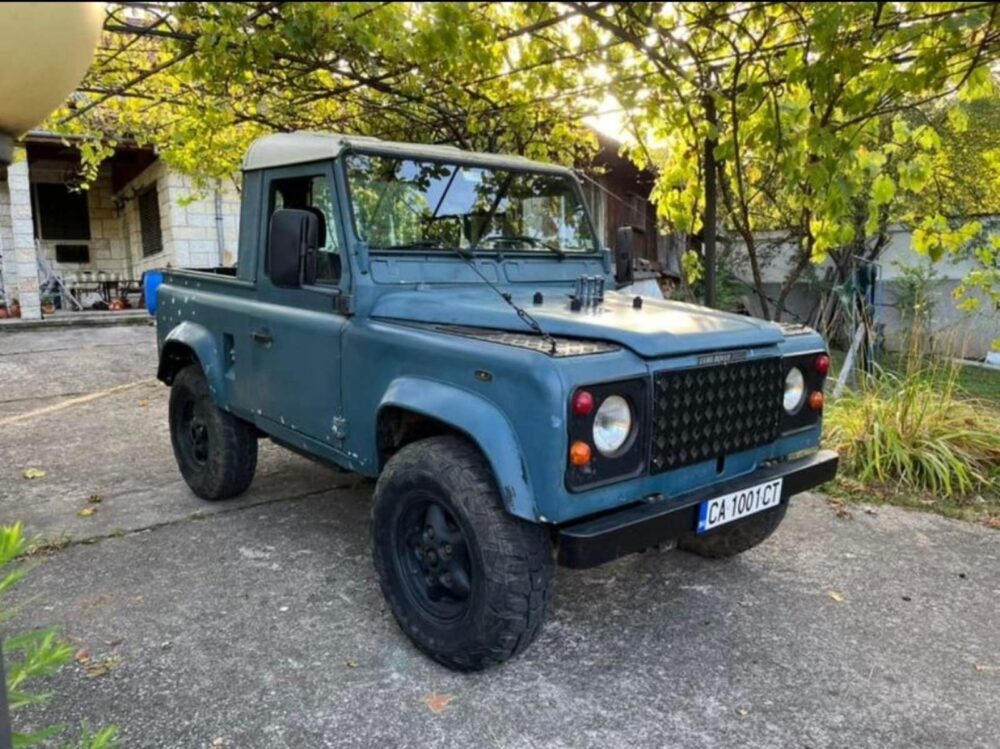
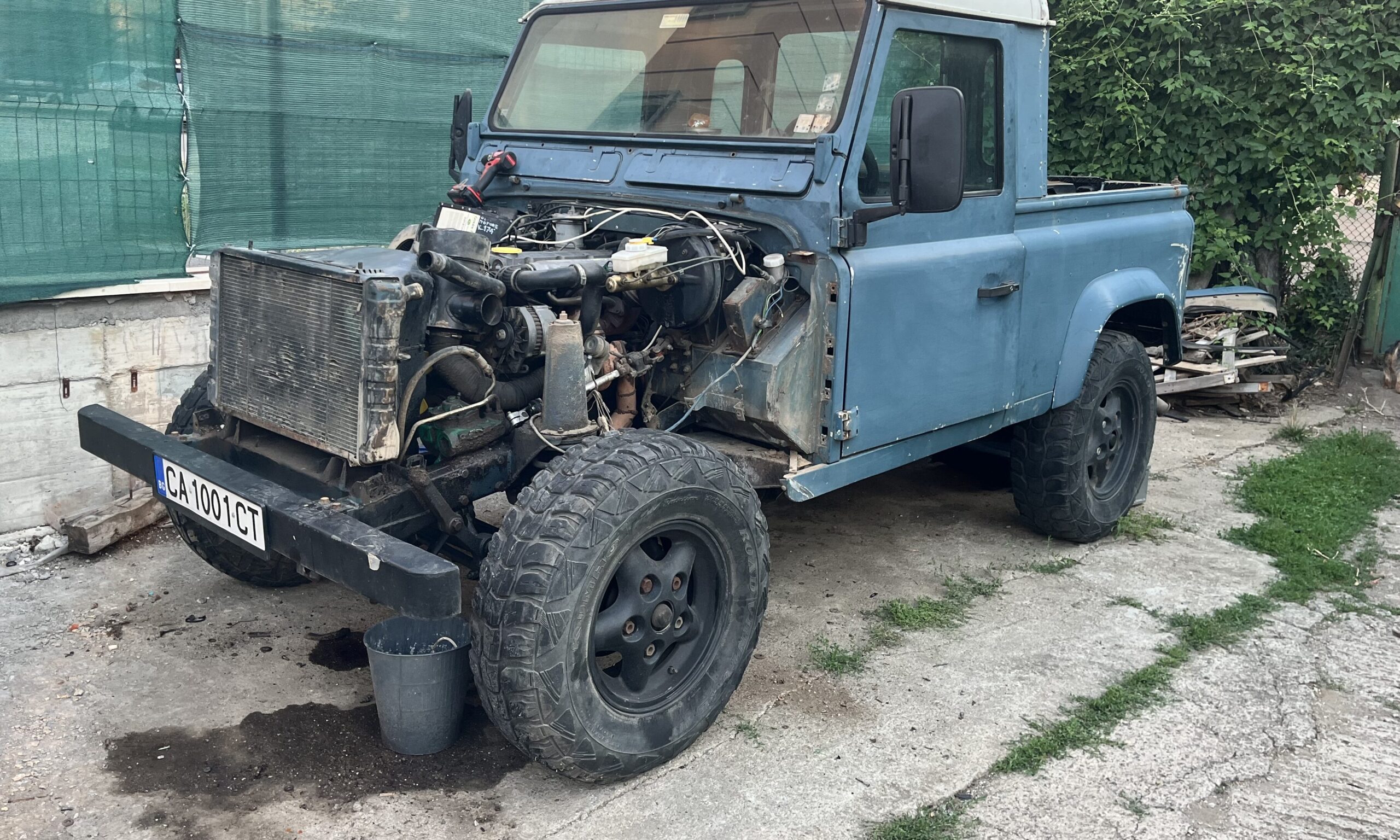
When lockdown lifted and we came back to Europe, we needed something to drive. For us, that only ever means one thing. A friend in the town we used to live in had spotted a tired blue 90, so we asked him to look it over and buy it for us. It was waiting when we landed.
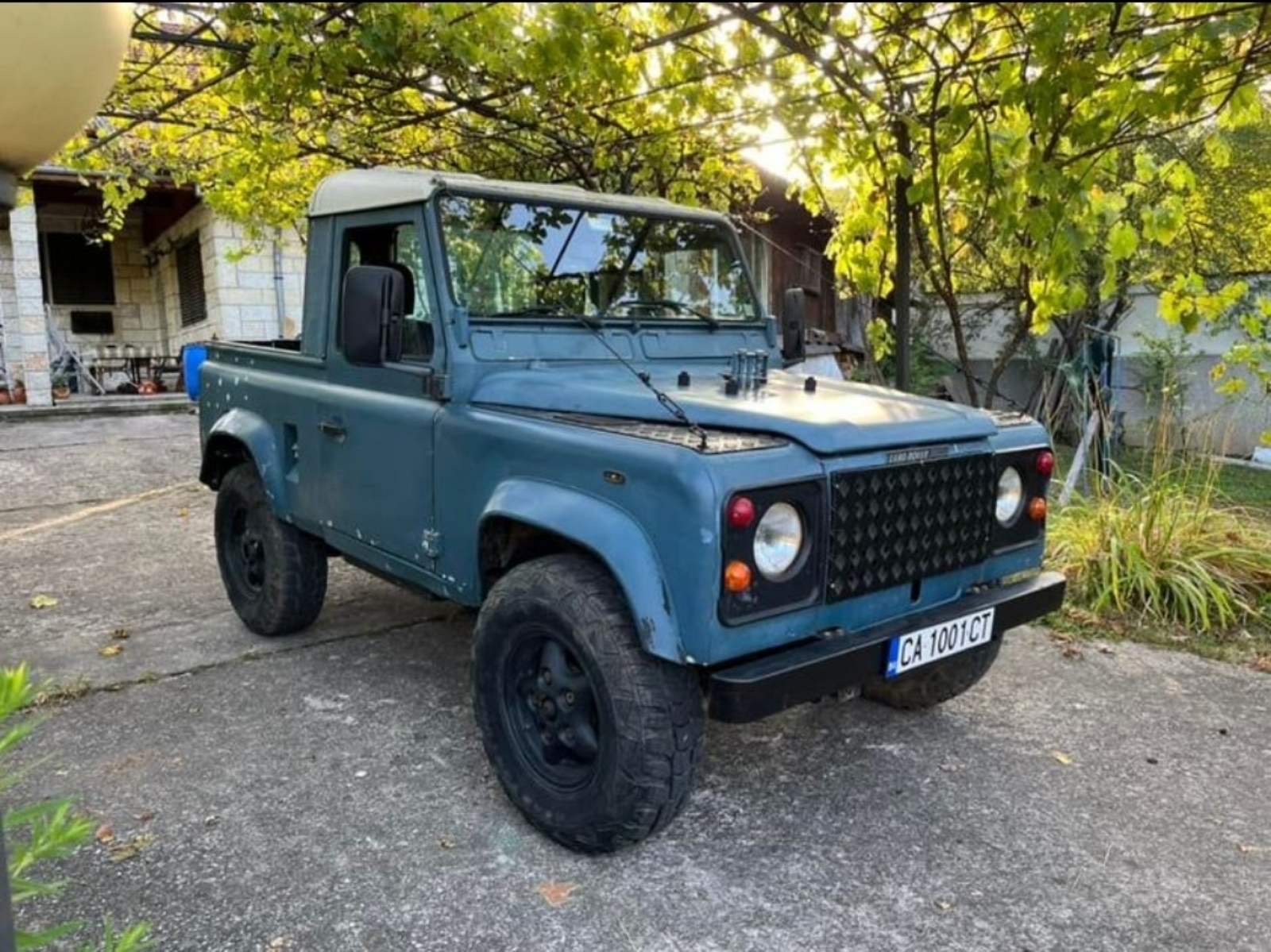
It was beat. And it was brilliant. Some of the best times we have with these trucks come before the restoration starts, when nothing is precious yet. We drove it the way Land Rover intended: hard, everywhere, and without a second thought for the brush scratches down its flanks.
As found
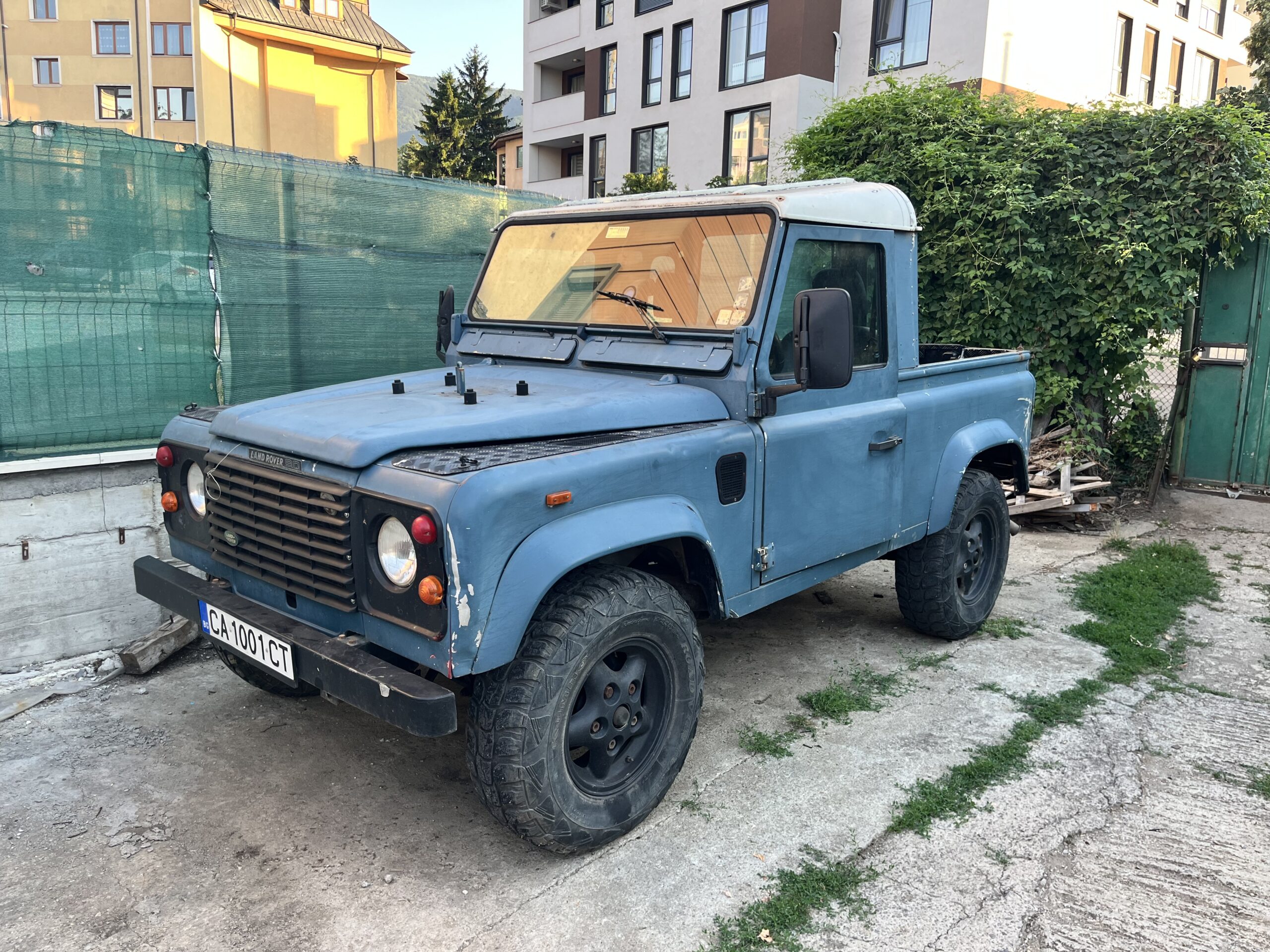
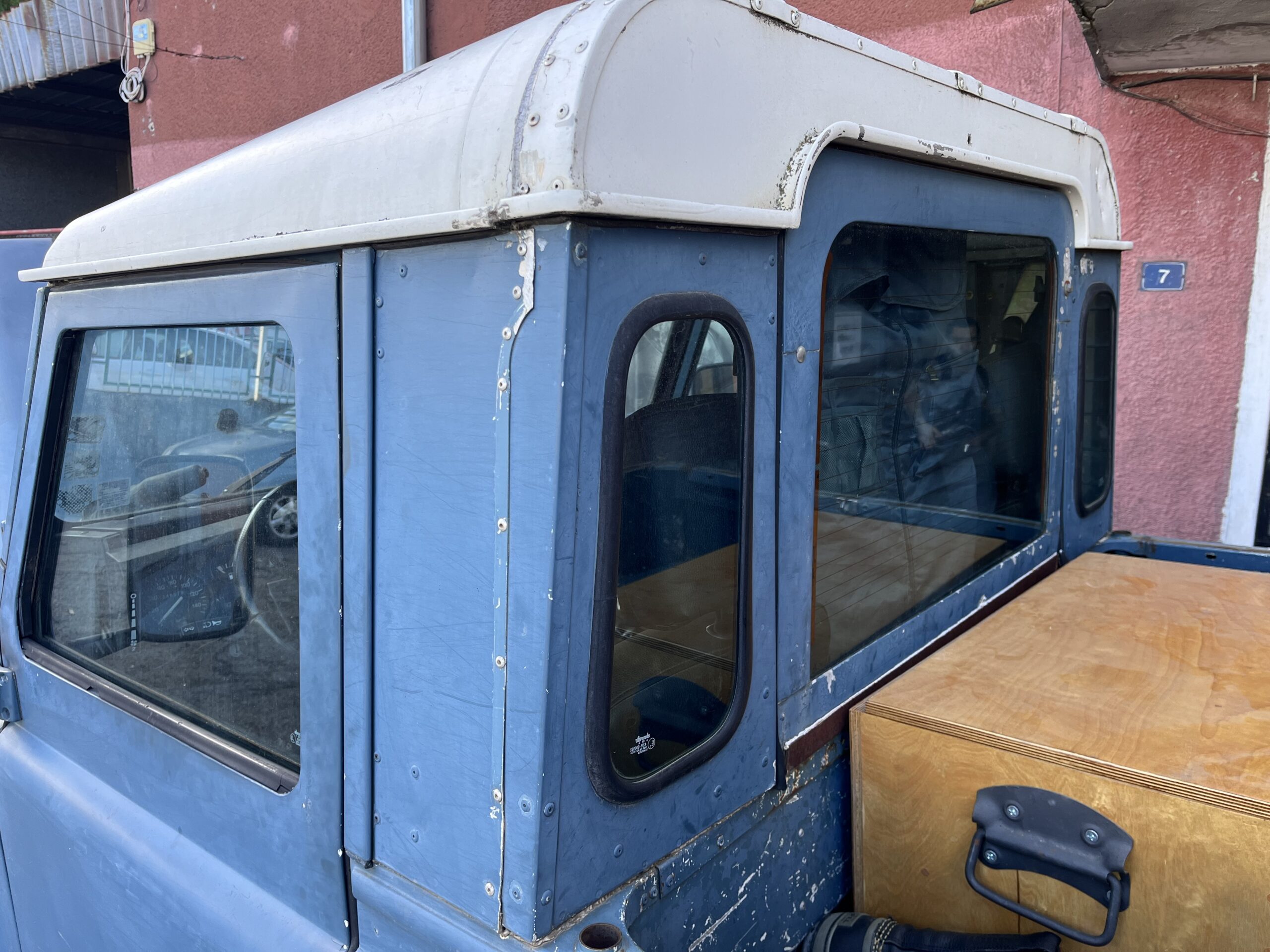
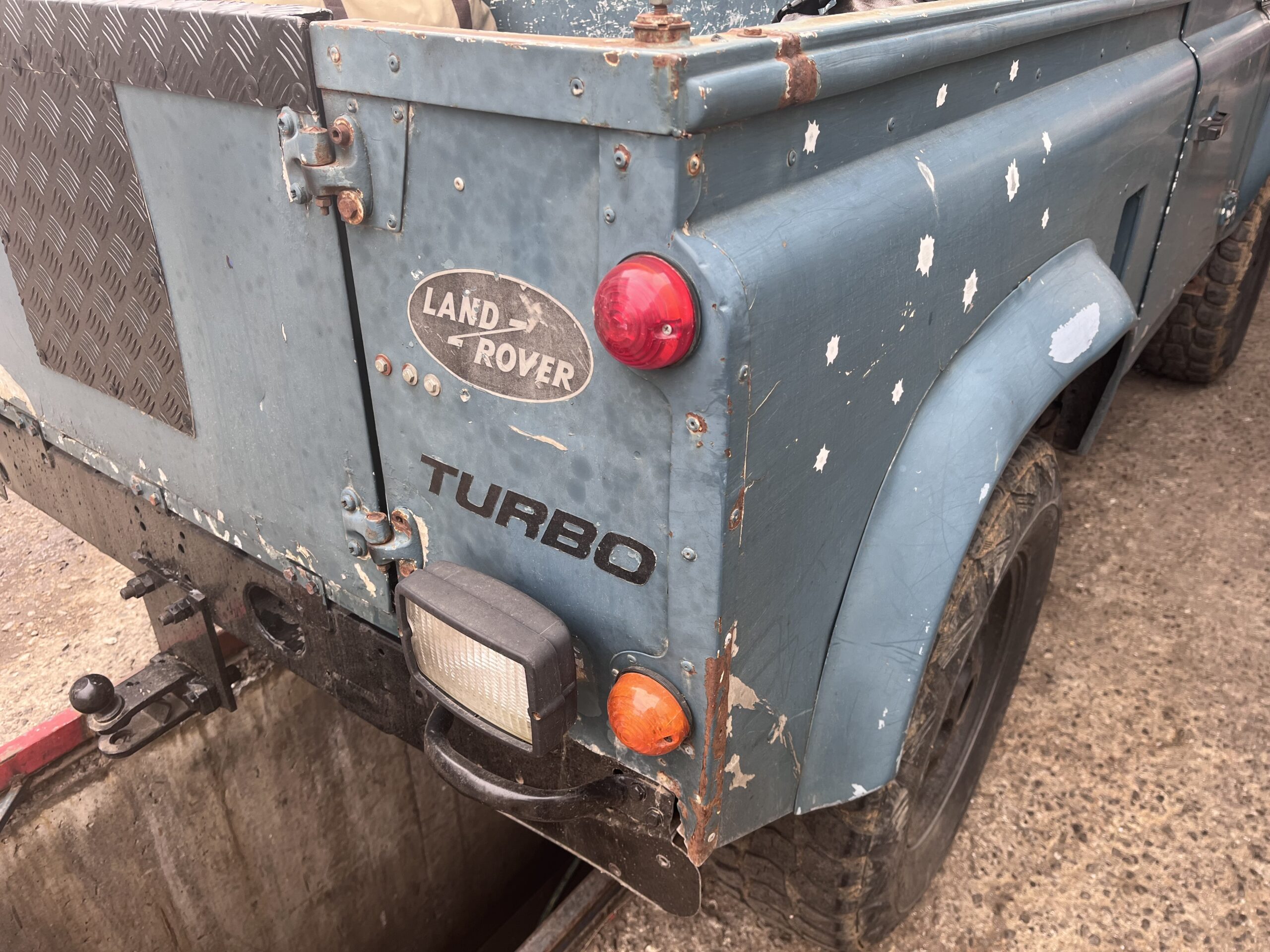
It wasn’t even a 90 in the usual sense anymore. Somewhere along the way it had been cut down into a pickup, and the bodywork offered a clue to its past: a scattering of fake bullet-hole stickers. We took them for a joke.
Under the scrapes, it still wore its original Arles Blue. My wife took one look and christened it Blueberry. Within a week it was just Barry.
The break
Then came Halkidiki. Two weeks of camping on the coast of northern Greece, and Barry was loaded to the roof: chuck box, kayak, snorkel gear, tent. Pulling a U-turn on the way out of town, we nudged a curb. There was a snap, then a sound like cutlery in a washing machine.
The transfer case had given up. We parked Barry, rented a car and went camping anyway.
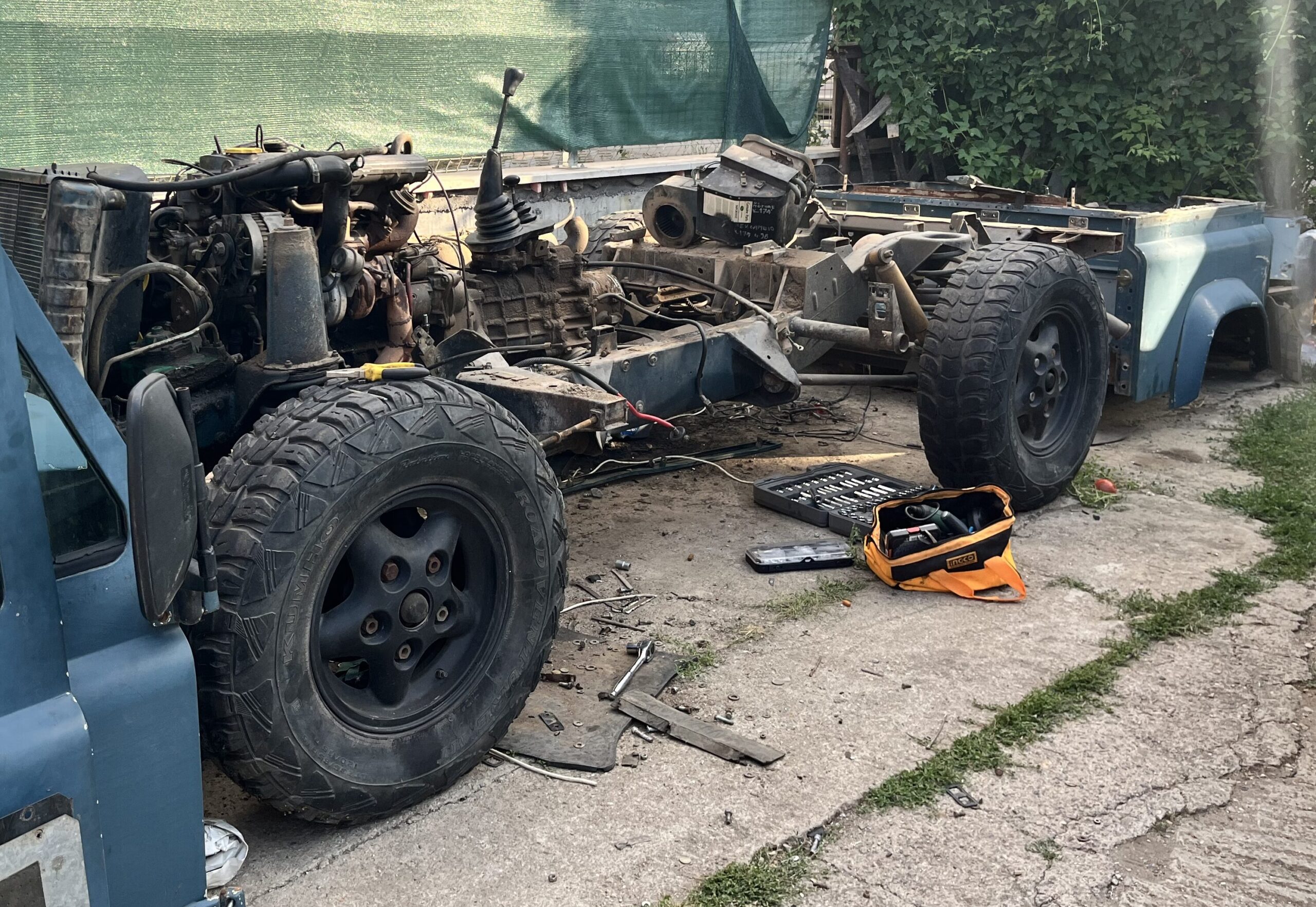
Back home, the teardown found the culprit. The LT230 transfer case is famously tough, but it has one major weakness: the internal differential cross-pin. Ours had snapped, sending the planetary gears into an unplanned orbit that mangled the case from the inside. That sealed it. The whole truck was coming apart.
Stripped bare
With the transfer case gone, the rest of Barry came apart piece by piece, and the past showed everywhere. What the stickers had hinted at, the dash confirmed: tucked inside were a handful of unfired .22 rounds, rolling around loose. It gave a whole new meaning to the term bullet fuse. We collected them carefully and disposed of them properly. Barry, it turned out, had spent a former life as a hunter’s truck.
Every panel was dented. In the end we could save only four things: the bonnet, the windscreen frame, the door frames and the bulkhead. The bulkhead was the surprise. After decades of hard use it was in shockingly good condition, which on a Defender is close to a minor miracle.
The door frames were stripped and sent for hot-dip galvanizing. Everything else was replaced: new front wings, a new rear tub, and a genuine Land Rover rear door, a factory take-off part.
The pickup conversion made one decision for us. To build it, someone had cut the roof in half, and there’s no un-cutting a roof. So Barry would become a soft top. Rather than hunting down a new roof and side panels, we ordered heavy-duty roll hoops and a brown canvas soft top: more fun, more open sky, and truer to how we wanted to use it.
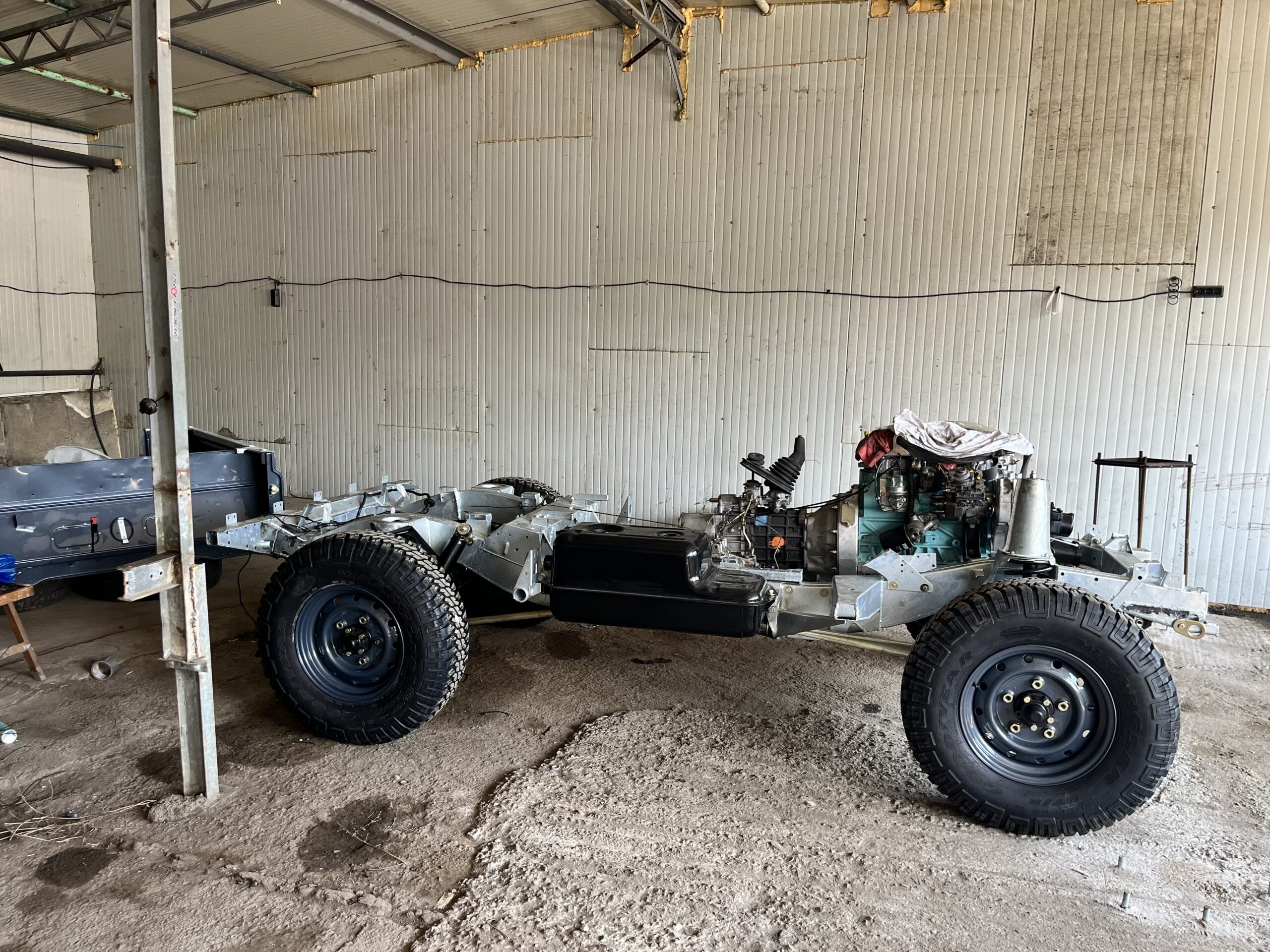
The chassis
With Barry peeled back to its essentials, the big question was the chassis, and the answer was better than we’d dared hope. It was sound, with one exception. At some point the previous owner had reversed into something that didn’t move, crushing a rear corner of the tub and bending the rear crossmember.
We could have repaired it. Instead we replaced it with a pristine, heavier-duty crossmember, and how we fitted it matters. The rear crossmember is a multi-layer assembly, spot-welded to the chassis at the factory. The quick way, and the way many builders do it, is to cut the old one off and cap the chassis rails. We took the slow way: grinding out each factory spot weld and separating the layers, so the new crossmember could be welded in at exactly the factory position, on the factory attachment points, with no cutting into the chassis and no extensions.
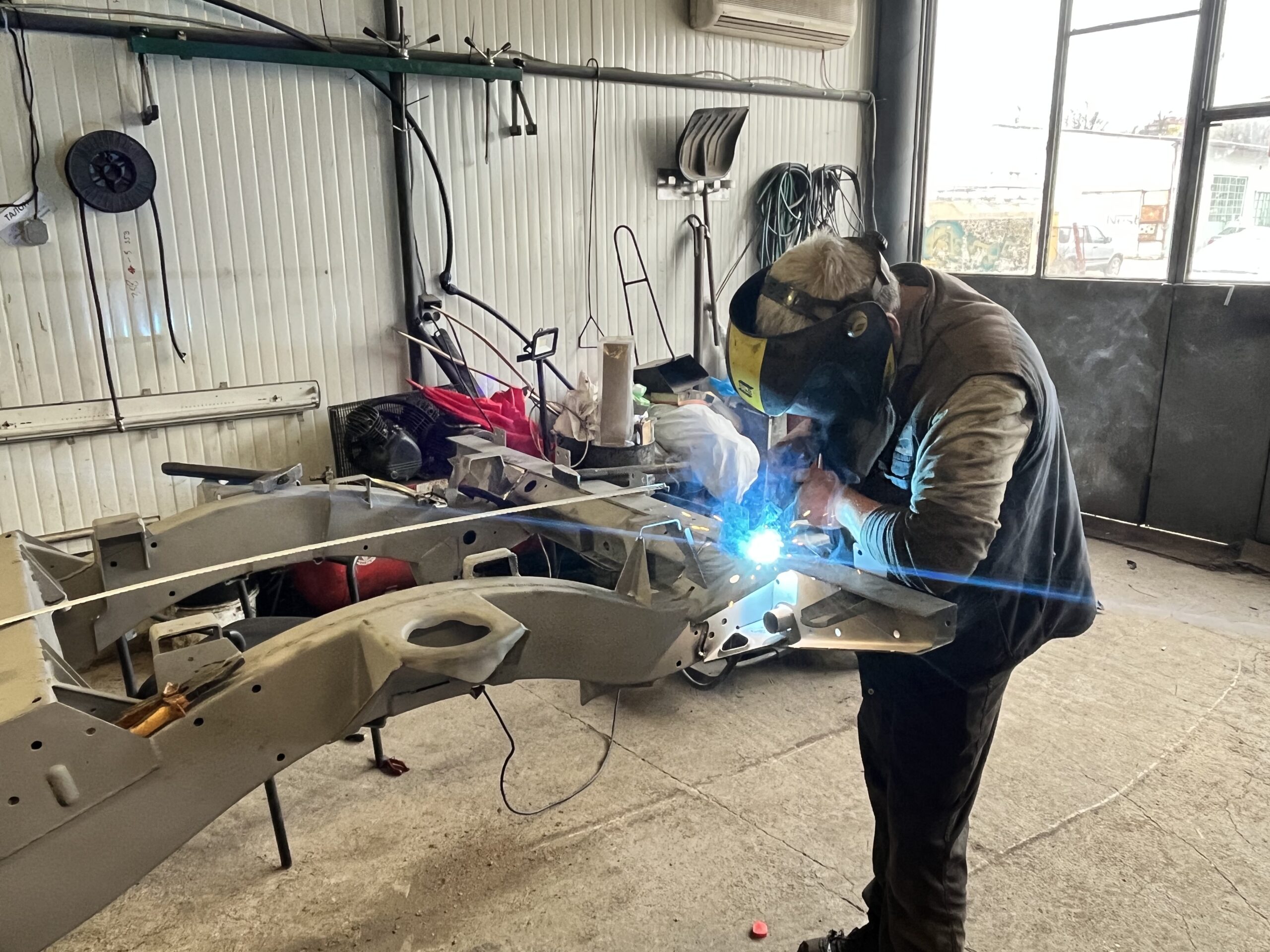
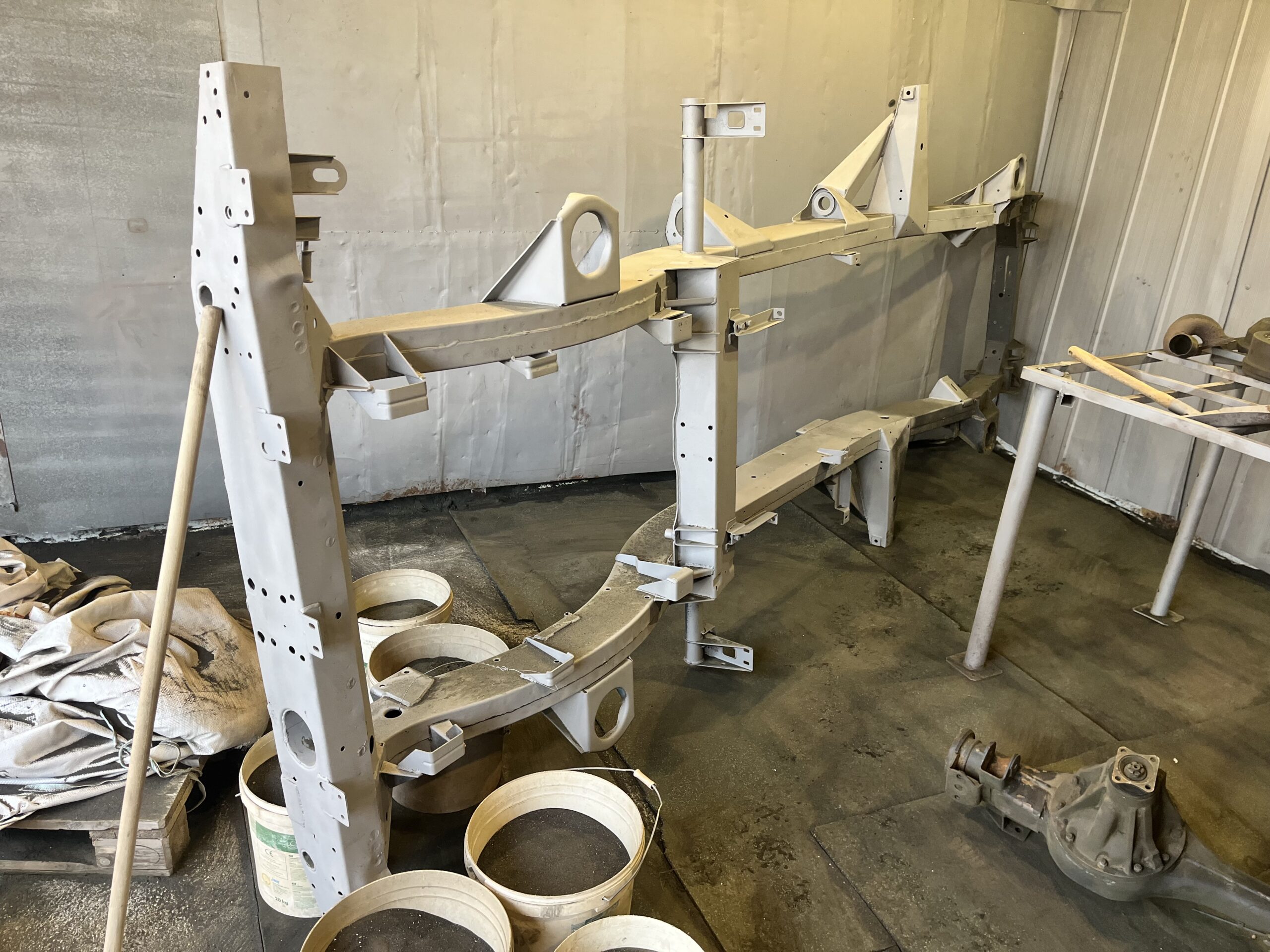
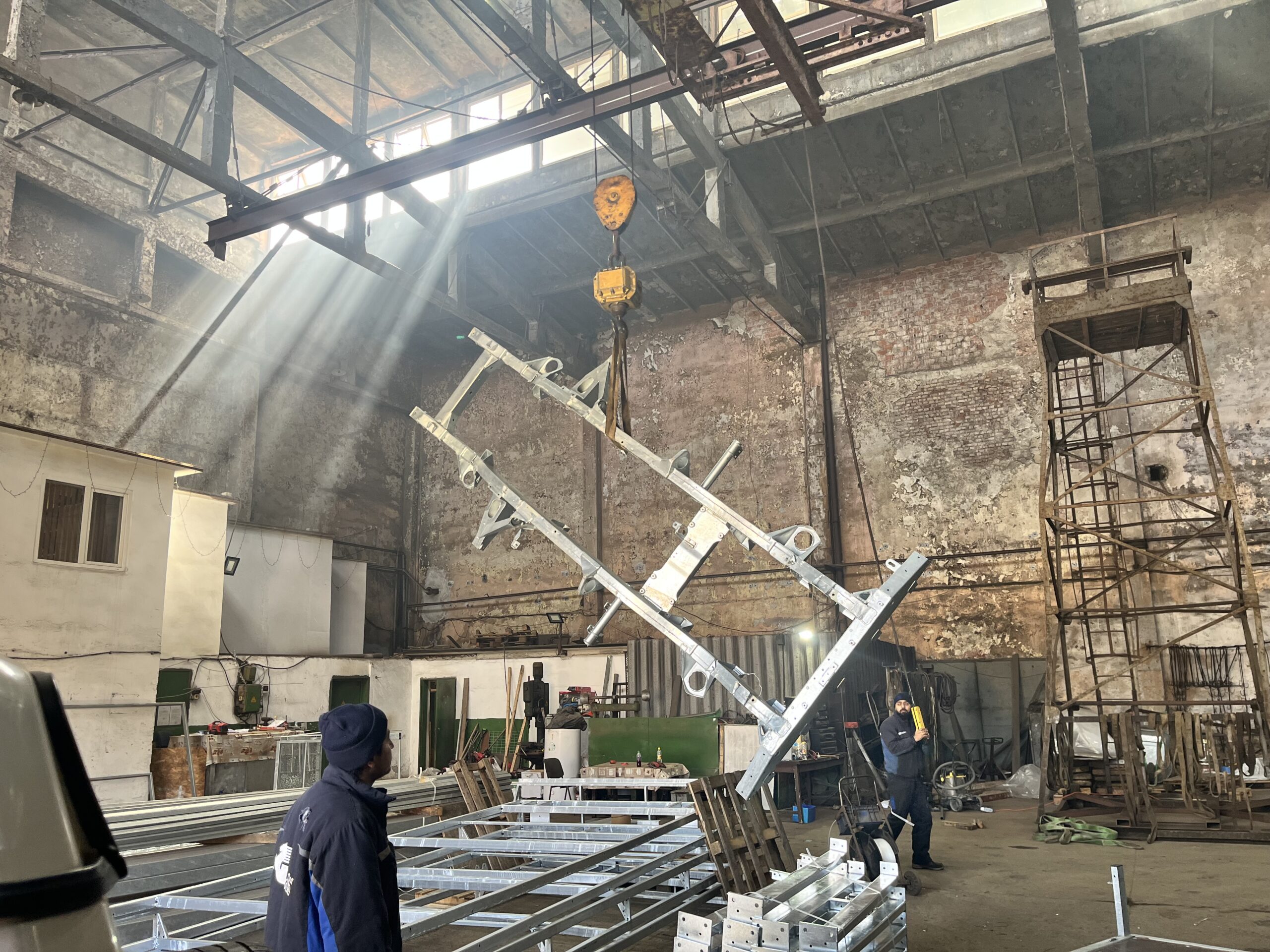
Then the chassis was sandblasted back to bare steel and sent to be hot-dip galvanized, inside and out. Before it went into the bath, we protected the VIN with multiple layers of high-heat silicone and cotton tape, so it came out exactly as Land Rover stamped it. It’s the same approach we took with the original chassis on the NAS and Nostalgia.
Axles, suspension, brakes and prop shafts
The axles had surprises of their own. In the rear differential, the pin was loose, a smaller cousin of the failure that had killed the transfer case, so a new one went on order. The crown wheel and pinion, thankfully, were in good condition and went back in.
The axle ends got everything new. A previous owner had used an old off-road trick, welding the drive flanges to the half shafts. It works, after a fashion, but it isn’t how a Defender should be built. So we ordered new flanges and new half shafts, along with new seals throughout. The bearings spun unevenly, a sure sign of wear, so we replaced them front and rear with genuine Land Rover and Timken parts.
The suspension arms were sandblasted, yellow zinc plated and fitted with new OE rubber bushes. New standard springs went in, along with gas-filled BOGE shocks, made by the company whose dampers Land Rover stamped its own name on.
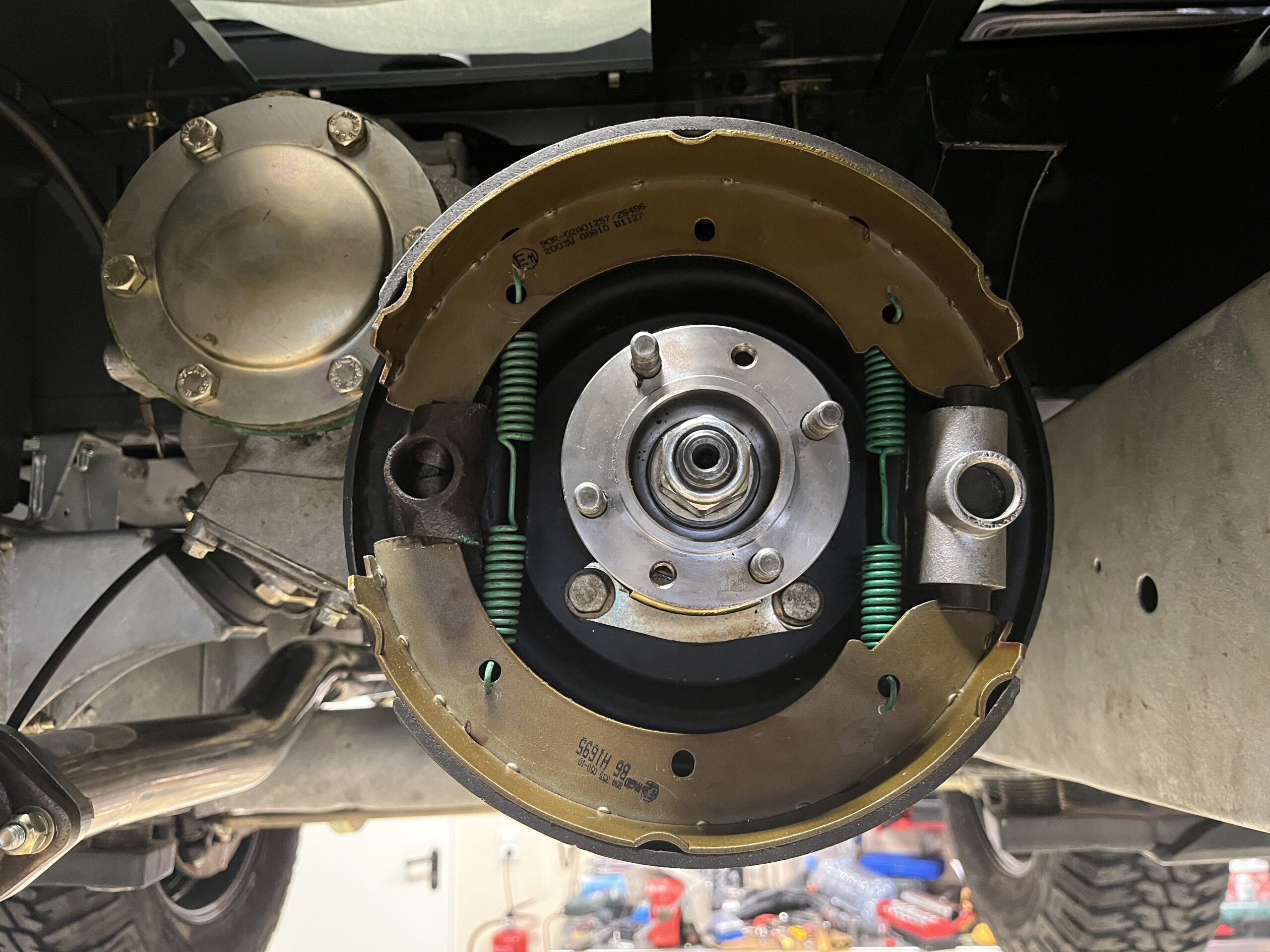
The brakes were renewed the same way. At the front, brand-new OE calipers, Geomet-coated discs and OE pads. At the rear, the drums were rebuilt with new wheel cylinders.
The prop shafts were worn beyond saving. Rather than rebuild them, we fitted two new heavy-duty Hardy Spicer shafts.
The engine
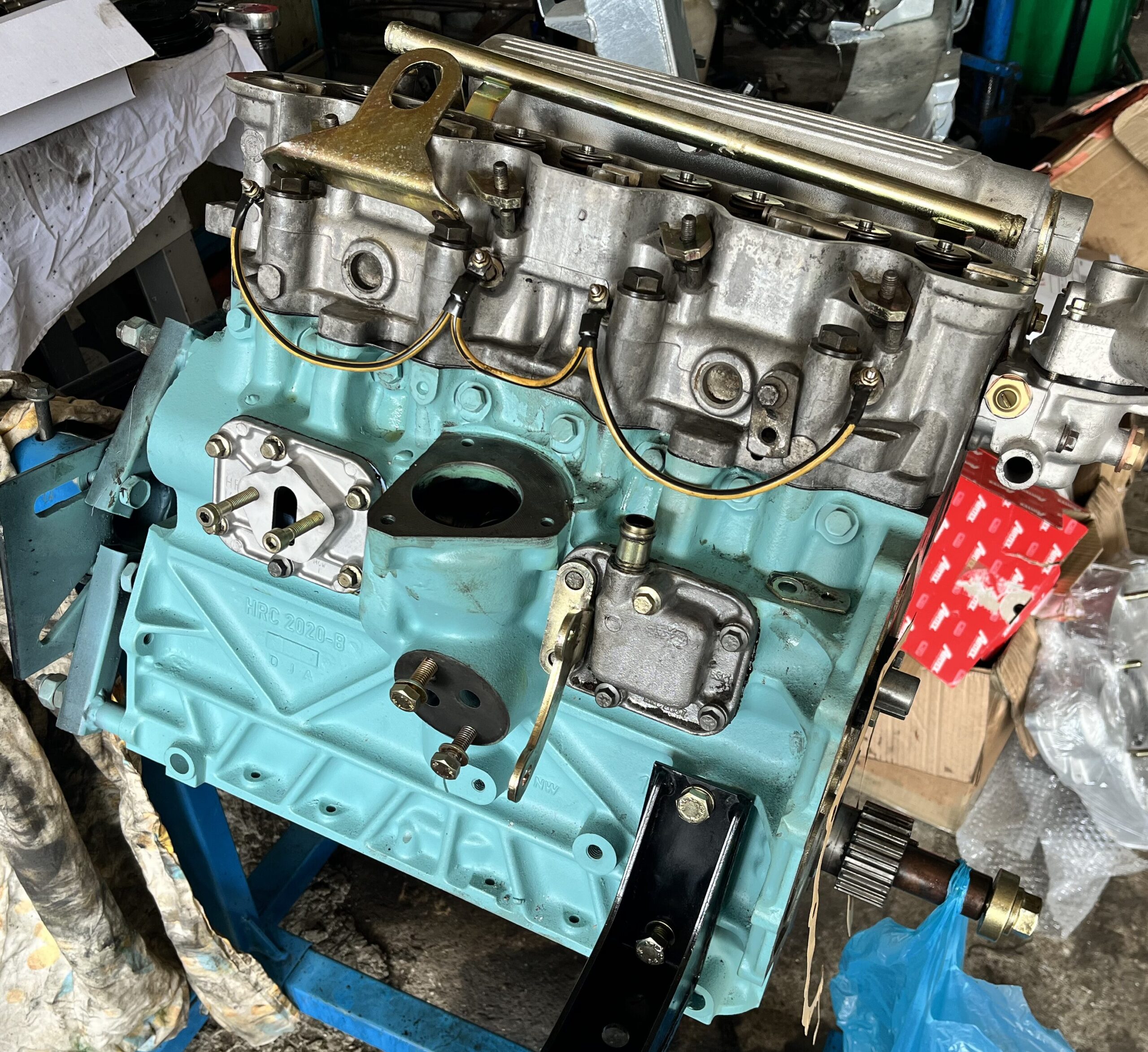
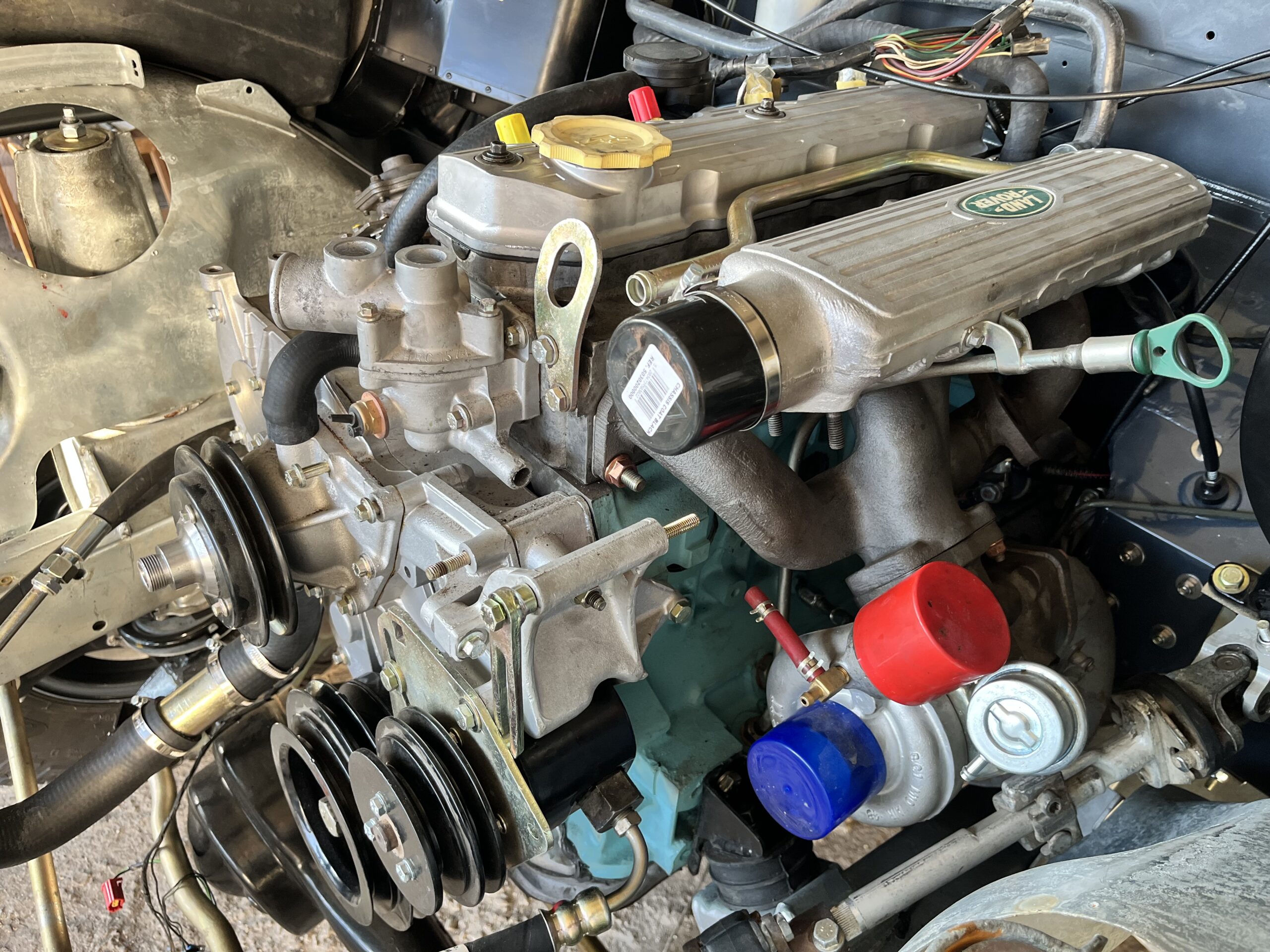
The 200Tdi came apart down to the bare block. Inside, the news was good: the pistons and cylinders were in fine shape. The cylinders were re-honed and fitted with new rings, and every bearing was replaced, on the connecting rods and the crankshaft.
Then the block was painted in high-heat enamel, in Land Rover’s duck egg green. It’s a nod to military tradition. When an engine was rebuilt, the whole thing was painted, hoses and all, so a mechanic could tell at a glance that it had been reconditioned. Ours carries the same mark.
The Garrett turbo was fitted with a new bearing cartridge. Every aluminium housing and casting was sent out to be water-blasted, which strips away decades of grease and brings back the fresh-from-the-mould finish they had when new.
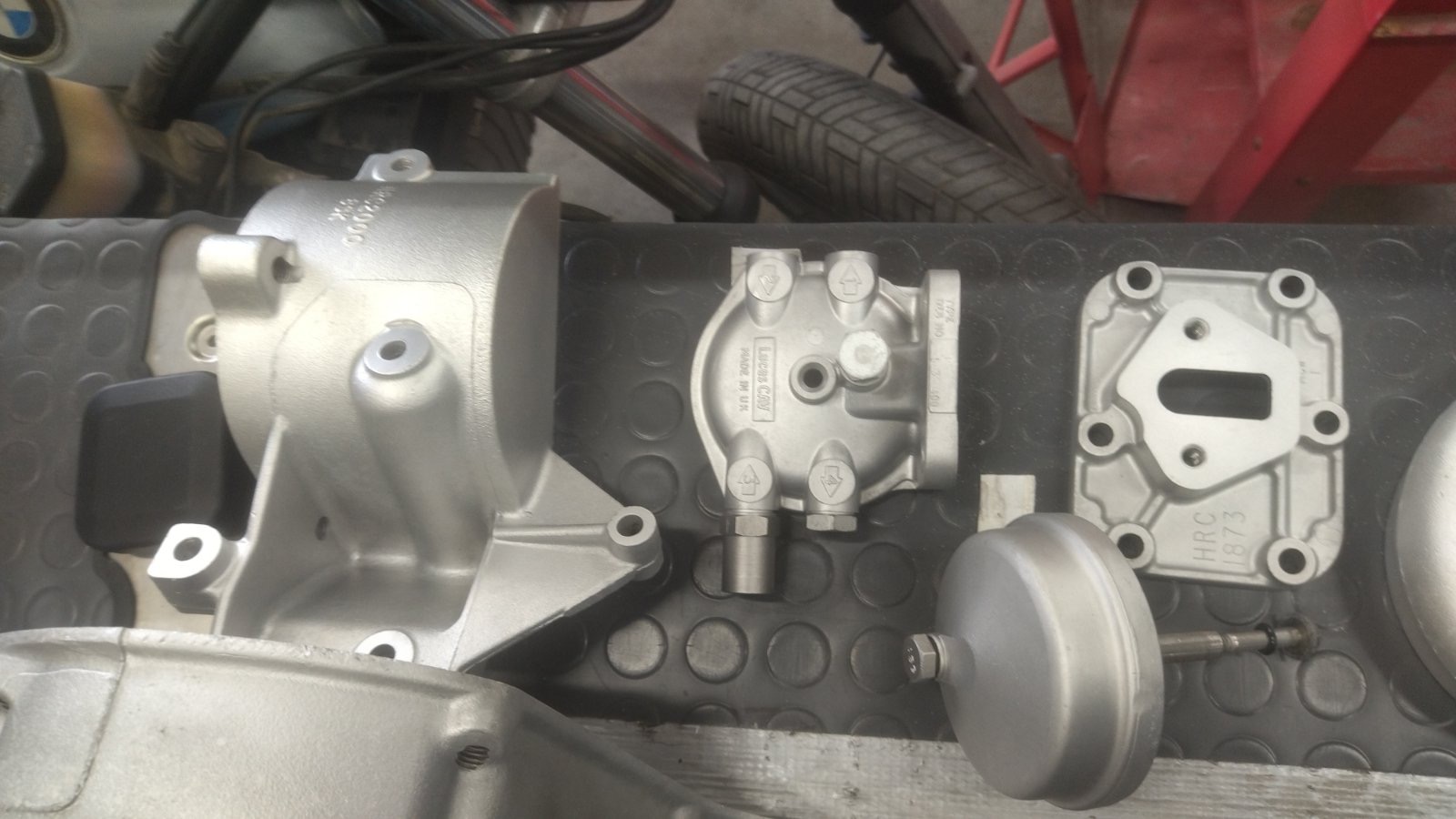
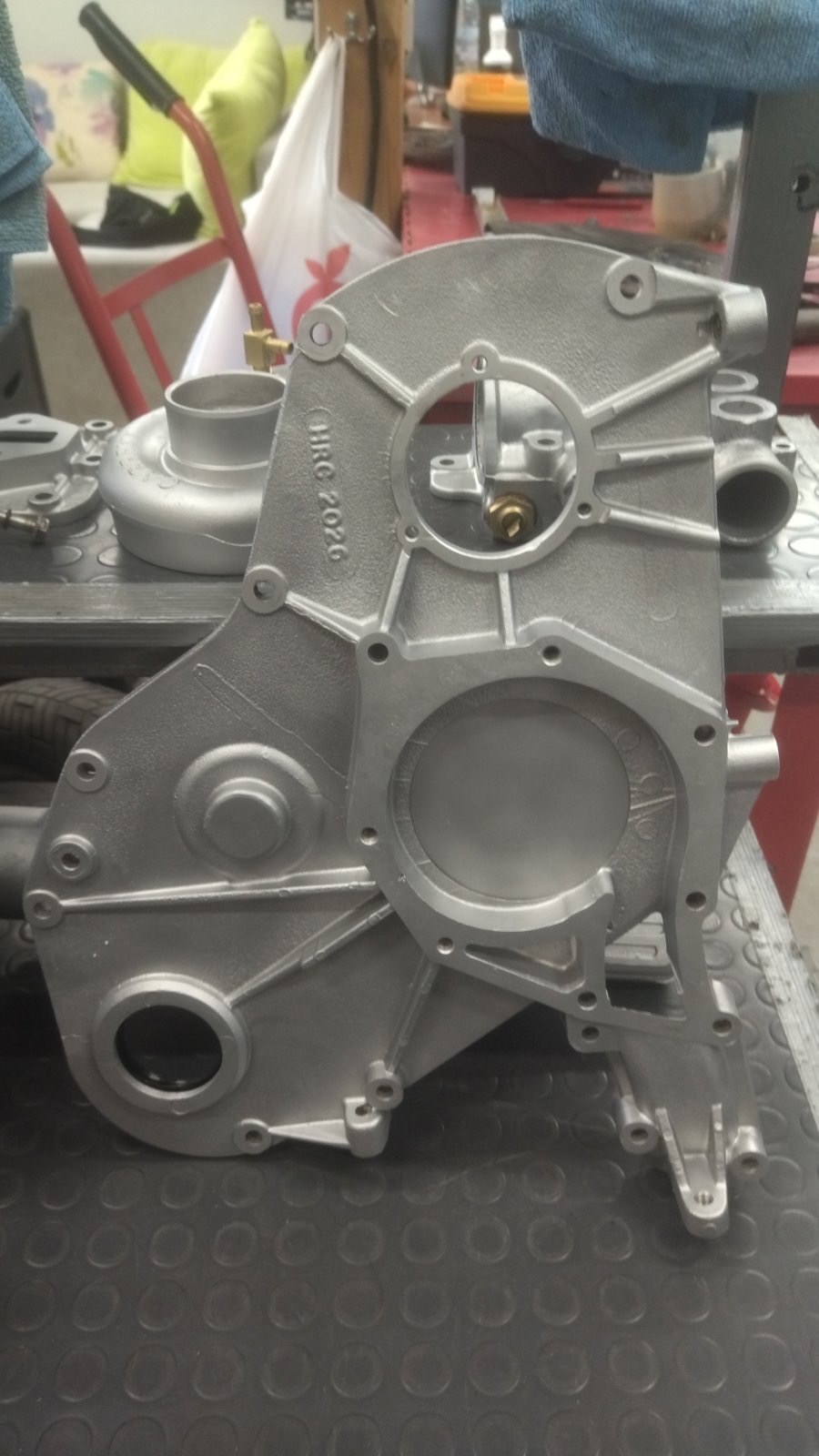
Around the engine, almost everything was renewed: a new water pump, a new alternator, and a new timing belt with fresh pulleys. Every original bolt was cleaned and yellow zinc plated again, and new gaskets went in throughout. The original Bosch injectors were cleaned and pressure tested, then fitted with new injector lines.
Cooling went back to basics. We sourced a genuine Land Rover copper radiator and fitted new hoses throughout, power steering lines included. The 200Tdi was a later transplant into a truck that was never built for an intercooler, so rather than re-plumb the front end to add one, we kept the cooling just as the Ninety was designed: simple, period correct, and proven. For a soft top built for coast roads and beach days, it has all the performance it needs.
The drivetrain
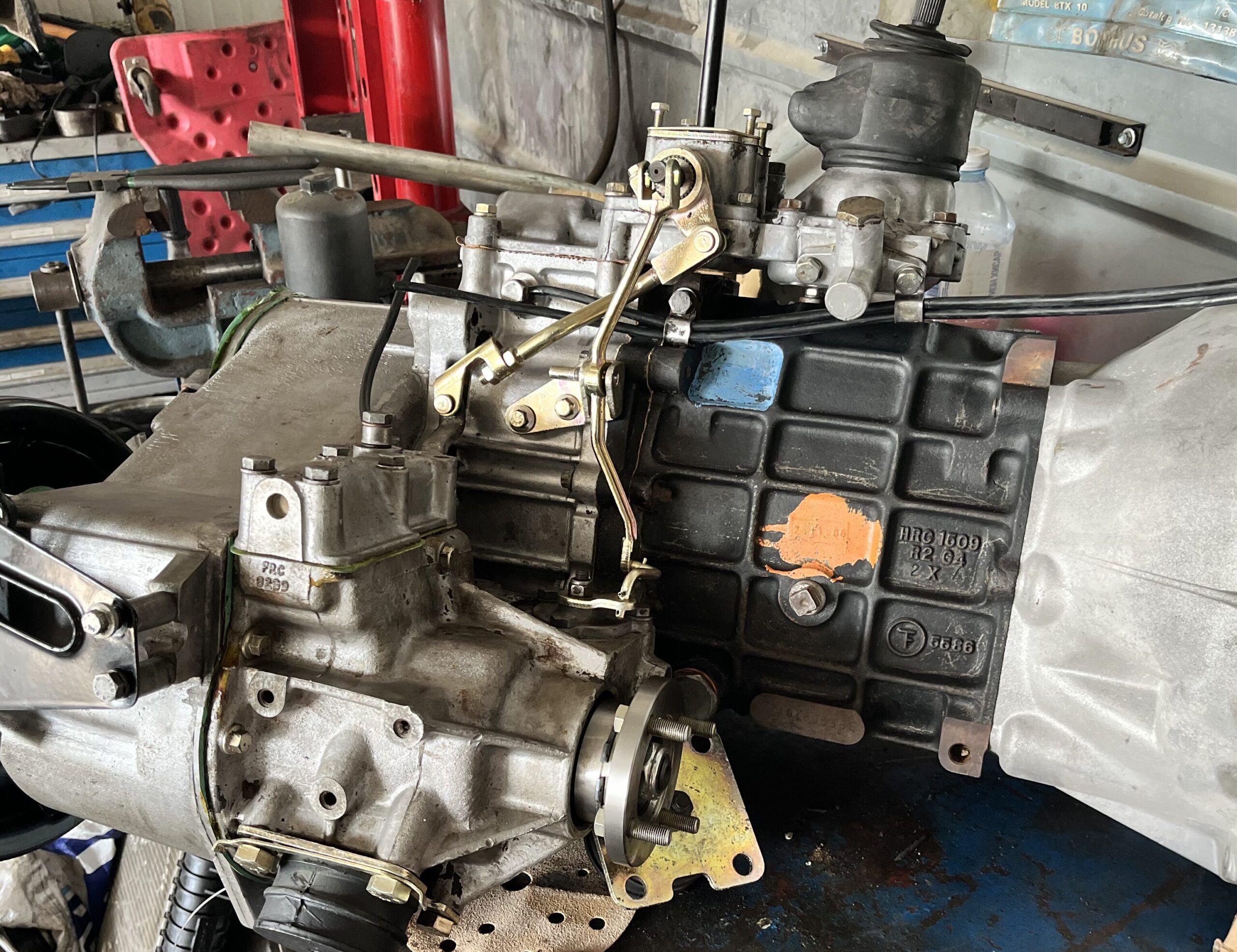
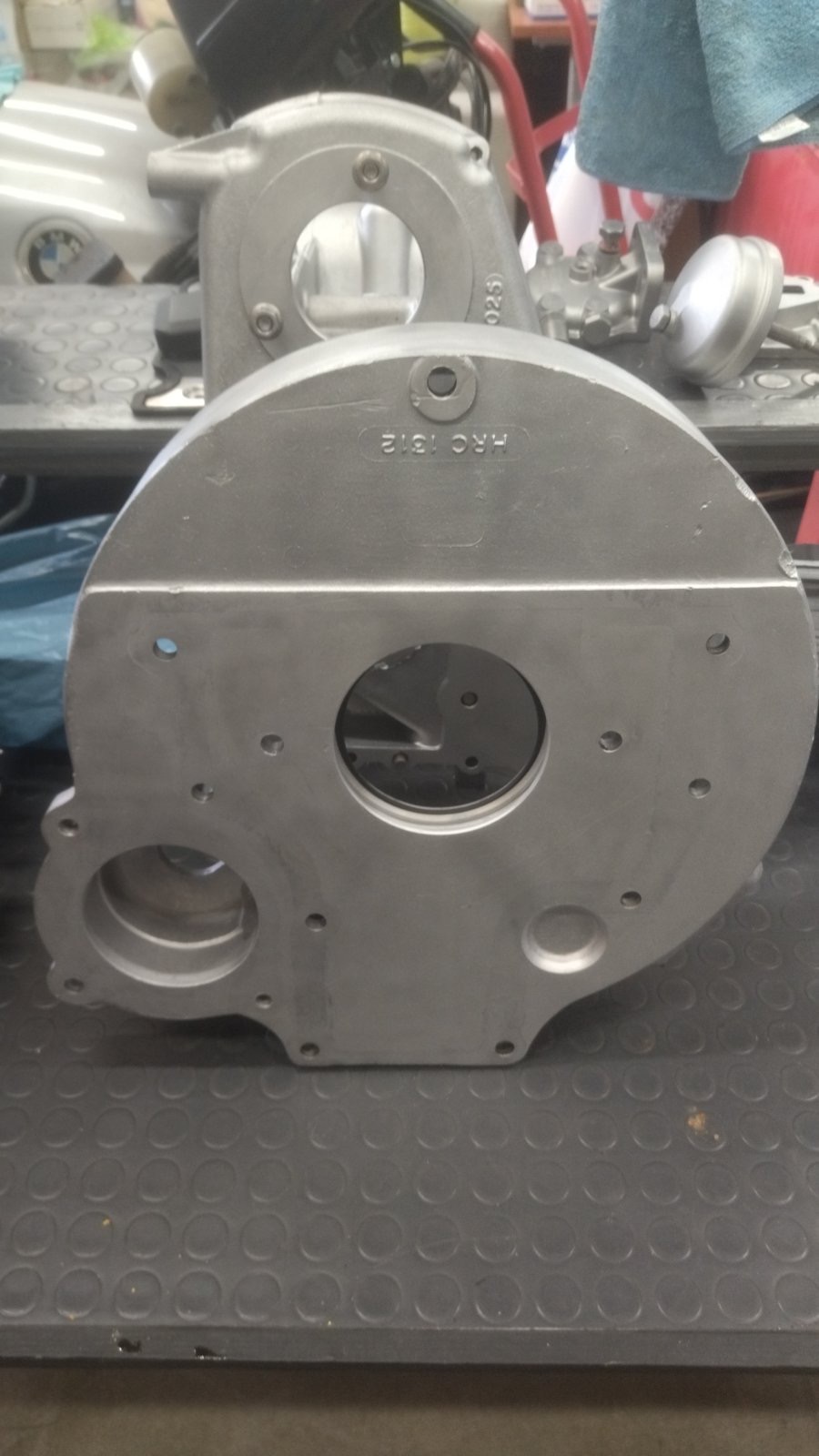
The gearbox brought a pleasant surprise: it had already been rebuilt at some point, and it still shifted crisply. We stripped the gear lever tower and replaced its bushes, and its bolts got the same yellow zinc treatment as the rest. The bell housing had a hole in it, so it was swapped for a freshly blasted replacement. A new clutch and new hydraulics completed the job.
Then the transfer case, the part that started it all. It was rebuilt with an Ashcroft kit, just as the gearbox and transfer case were on the NAS: every bearing replaced, new gaskets throughout, and freshly zinc-plated bolts. The mangled casing was replaced, and so were the planetary gears, which had been reduced to shrapnel. At its heart now sits a heavy-duty Ashcroft cross-pin, the fix for the very weak spot that ended Barry’s trip to Halkidiki. That one won’t be snapping again.
The electrics
Old wiring is where many restorations cut corners. Ours didn’t. The original chassis loom was tested end to end, re-wrapped, and fitted with new Lucas-style bullet connectors and rubber boots, the type Land Rover used from the start.
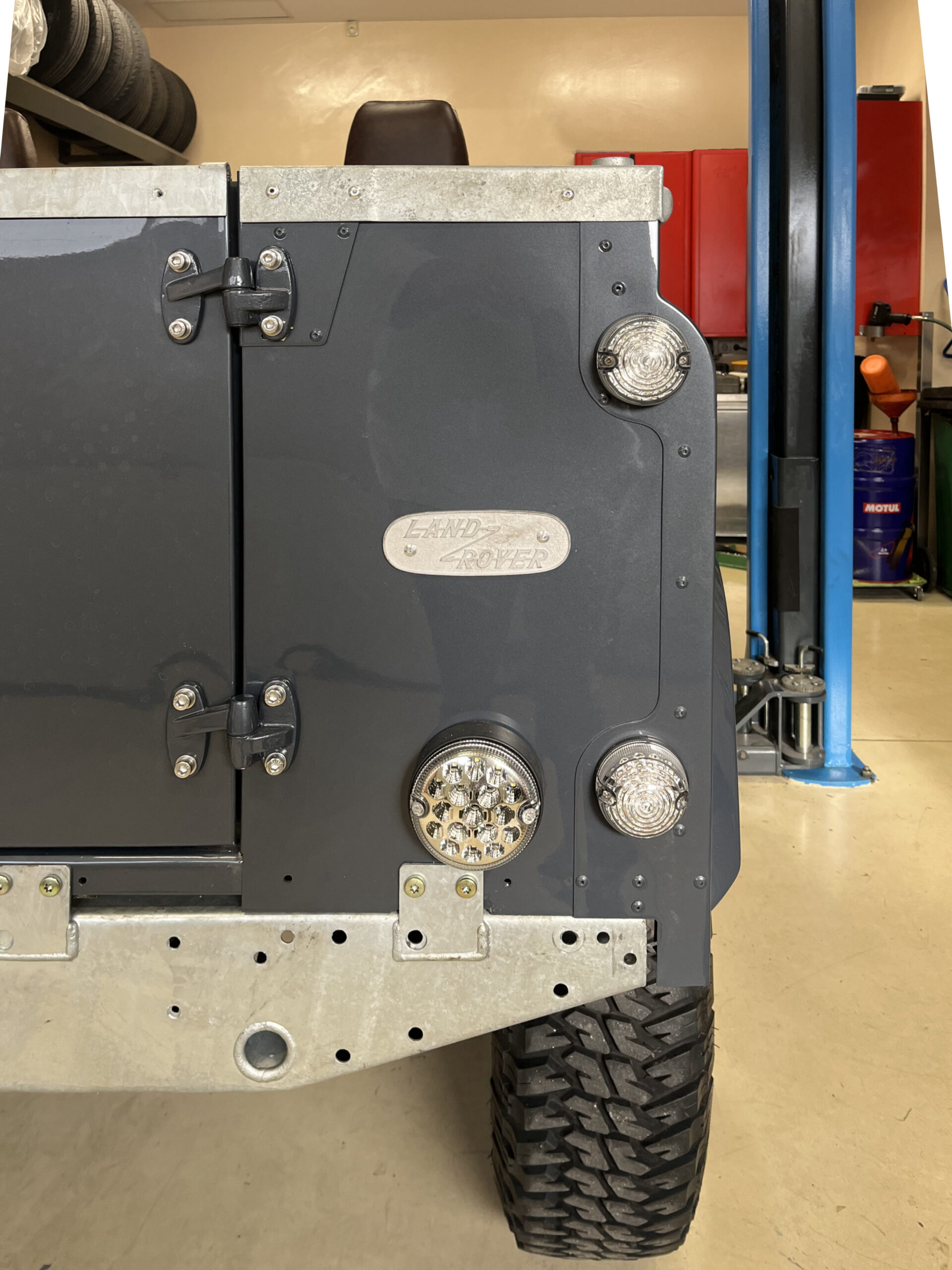
In the front wings, the headlight and indicator harnesses were replaced with genuine Land Rover looms, joined with sealed, OE-grade connectors rather than soldered. They’re easier to service and far better at keeping water out. Every indicator was replaced with a crystal-clear LED unit, and fitted with the same OE AMP connectors.
Choosing the colour
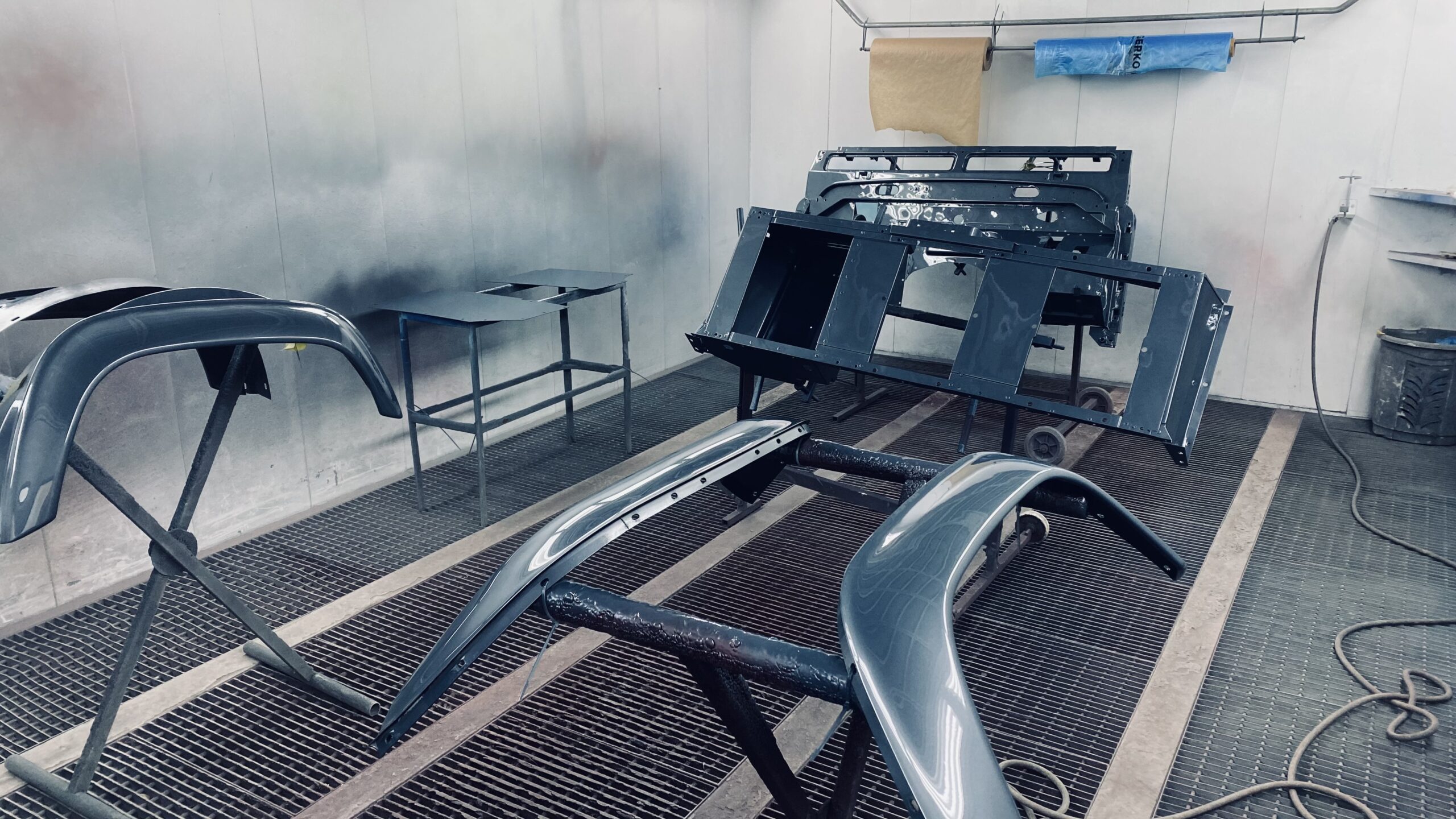
The new panels arrived as a patchwork, each in a different colour, so a full colour change was the only sensible option. It also made the logistics simple: the new parts went straight to the painter, and Barry’s old dented panels went to the recycler.
We wanted to keep a hint of Barry’s original blue, so on the drive through northern Greece we went looking for inspiration. We’d stop beside parked cars and photograph them, not because they were anything special, but for their colours. A Fiat Panda looked promising from a distance, but flat up close. A Volvo was the same. Then we found it, on a Mazda of all things: a grey that turned blue when it slipped into shade, with a fine metallic fleck that came alive in the sun.
That’s Polymetal Grey. In bright light it reads as grey. Step into the shadows and the blue comes back, a quiet nod to the truck Barry used to be.
Paint and bodywork
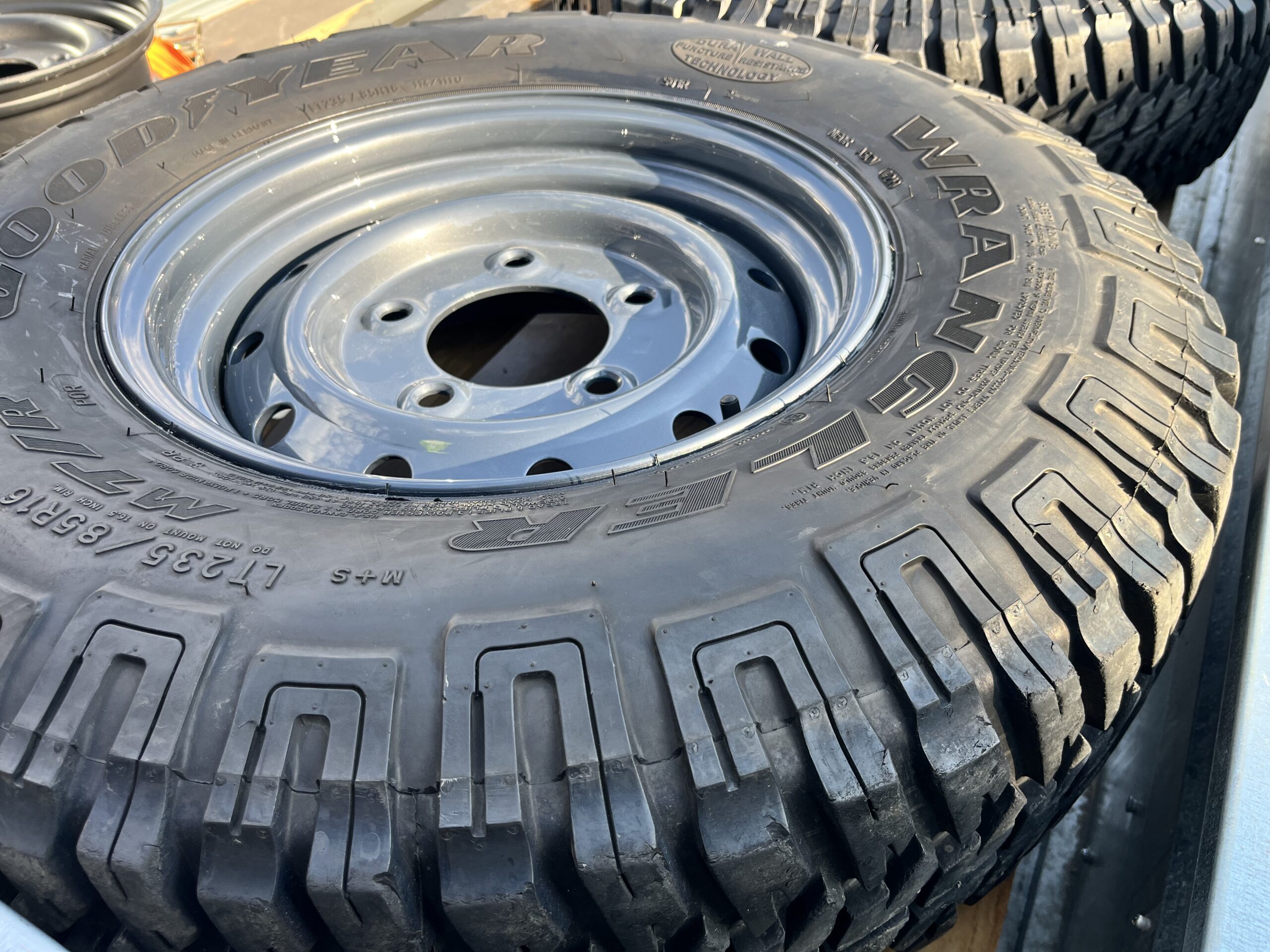
The door frames, already galvanized, were reskinned in aluminium, just as Land Rover built them originally. Then every panel went to our paint partner, the same trusted shop behind Blue Crush, the Forge, the Evergreen, Winter Soldier, Biltong and Nostalgia. Each one was painted inside and out, piece by piece, before anything was bolted back together. The Wolf wheels, headlight surrounds and wheel arches were all painted in Polymetal Grey too. Where most Defenders wear black plastic arches, the Ninety carries its colour from the arches to the light surrounds, a clean, modern, monochrome look that still keeps all its heritage charm.
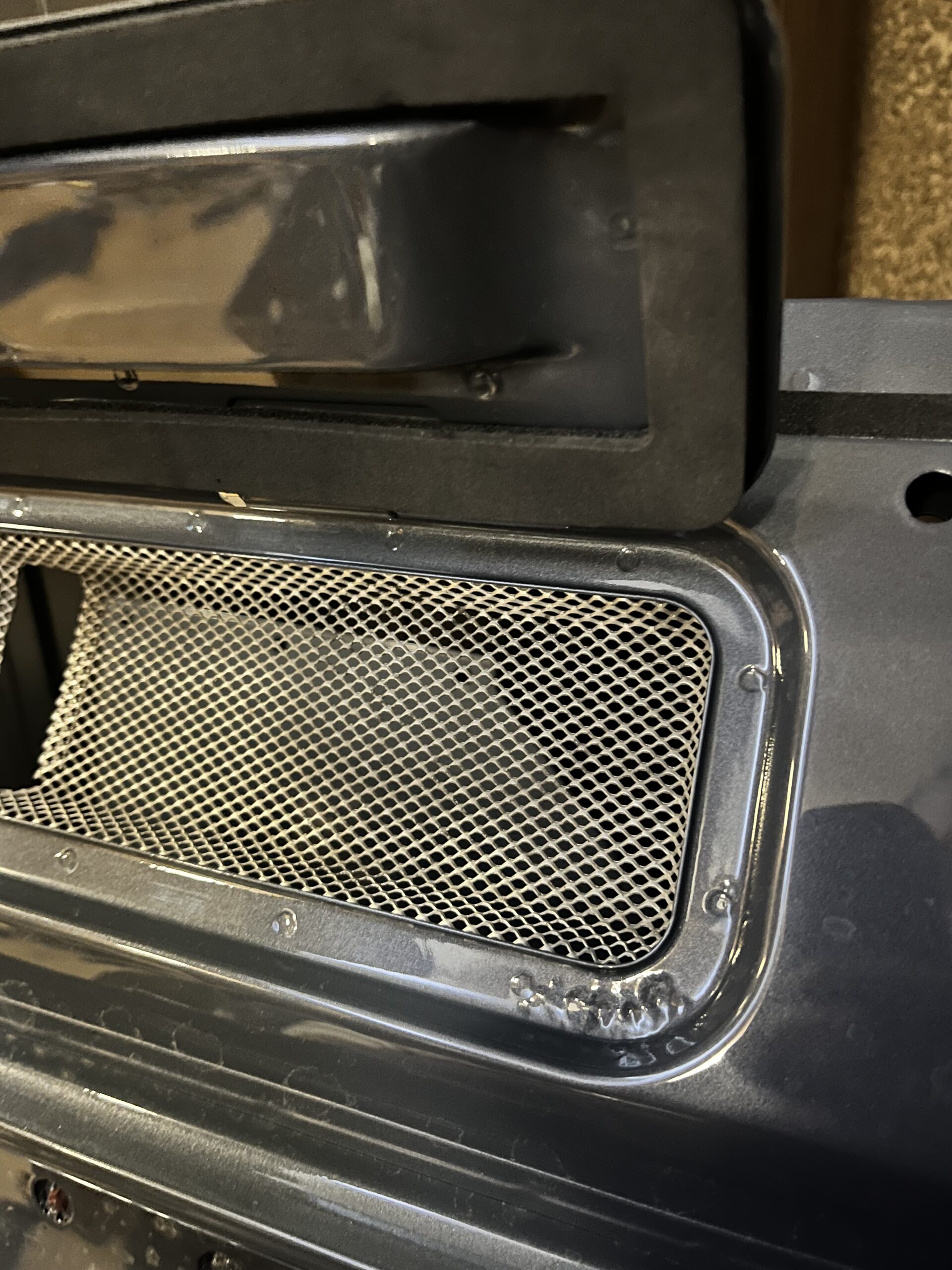
One small detail we care about: the aluminium mesh in the bulkhead vents. On later Defenders it’s simply painted over. We drilled it out before paint and riveted it back in afterwards, left in natural aluminium. Against the Polymetal Grey it picks up the silver of the Optimill vent grilles and keeps the cool grey-blue theme running through the whole truck.
The interior
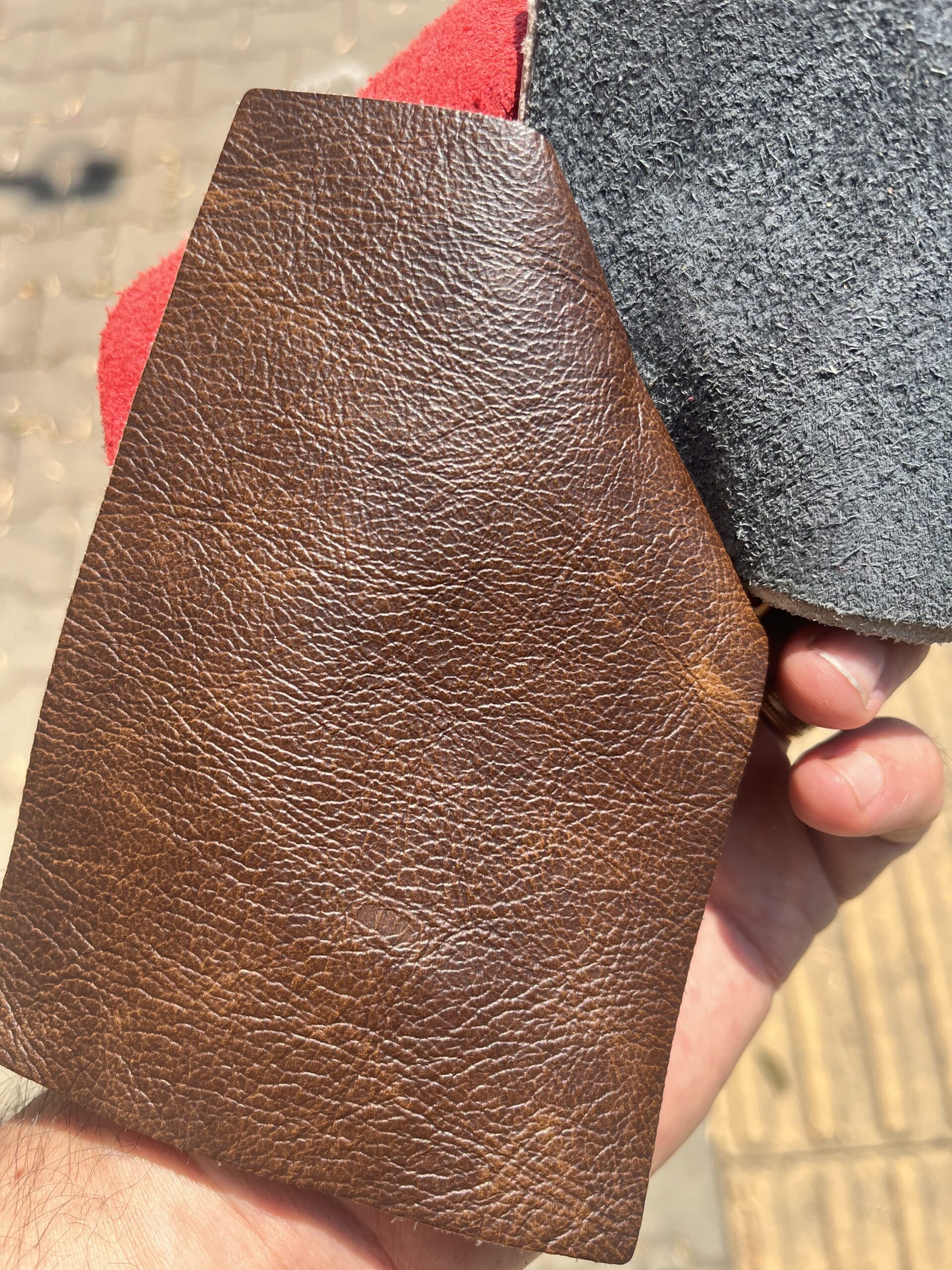
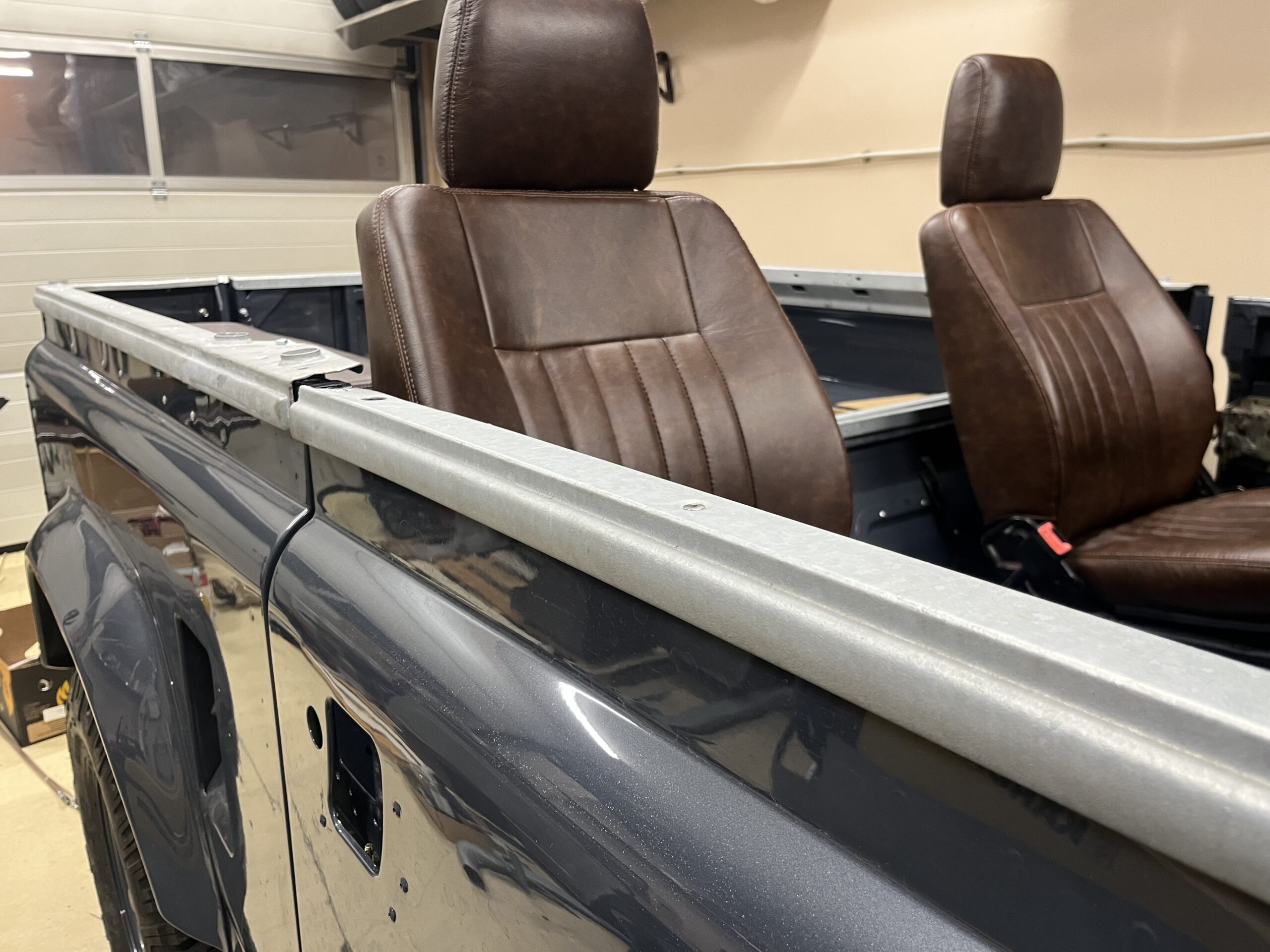
Inside, the front seats were stripped to their frames, which were repainted, then fitted with new foam and retrimmed in distressed brown leather, fluted, with double-stitched seams. The rear benches were taken apart and sent off to be hot-dip galvanized. The sun visors were trimmed to match, hand-stitched, and so were the door cards.
The original cubby box was rebuilt to house a dock for a Marshall Bluetooth speaker, and its lid got thicker padding, perfect for leaning on while you cruise down the coast with the top off.
The dash and knee guard had been vinyl from the factory. We re-covered them in genuine leather, but kept the original black, the way Land Rover would have done it if they’d been feeling generous. Underfoot, the front mats are New Zealand wool berber, the same material we used in Blue Crush, finished with leather binding around the edges. Wool naturally resists water and stains, so climbing in fresh from the sea is no problem at all.
The final stretch
A few jobs remain, and none of them are being rushed. The radiator and intake plumbing go in next. The fuel lines are being replaced with braided stainless steel over a PTFE core, and the brake lines with cupronickel, which won’t rust and outlasts steel line many times over.
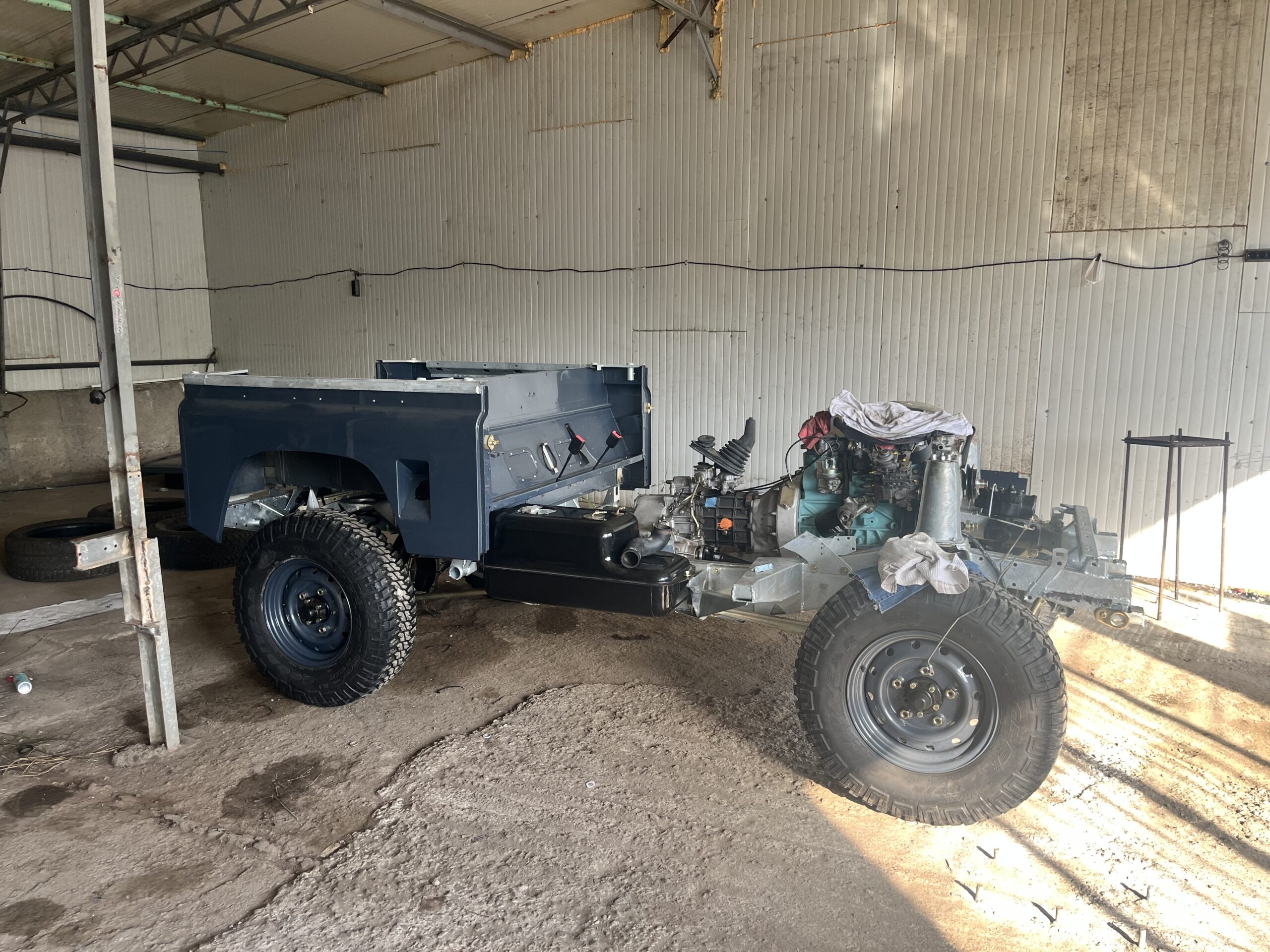
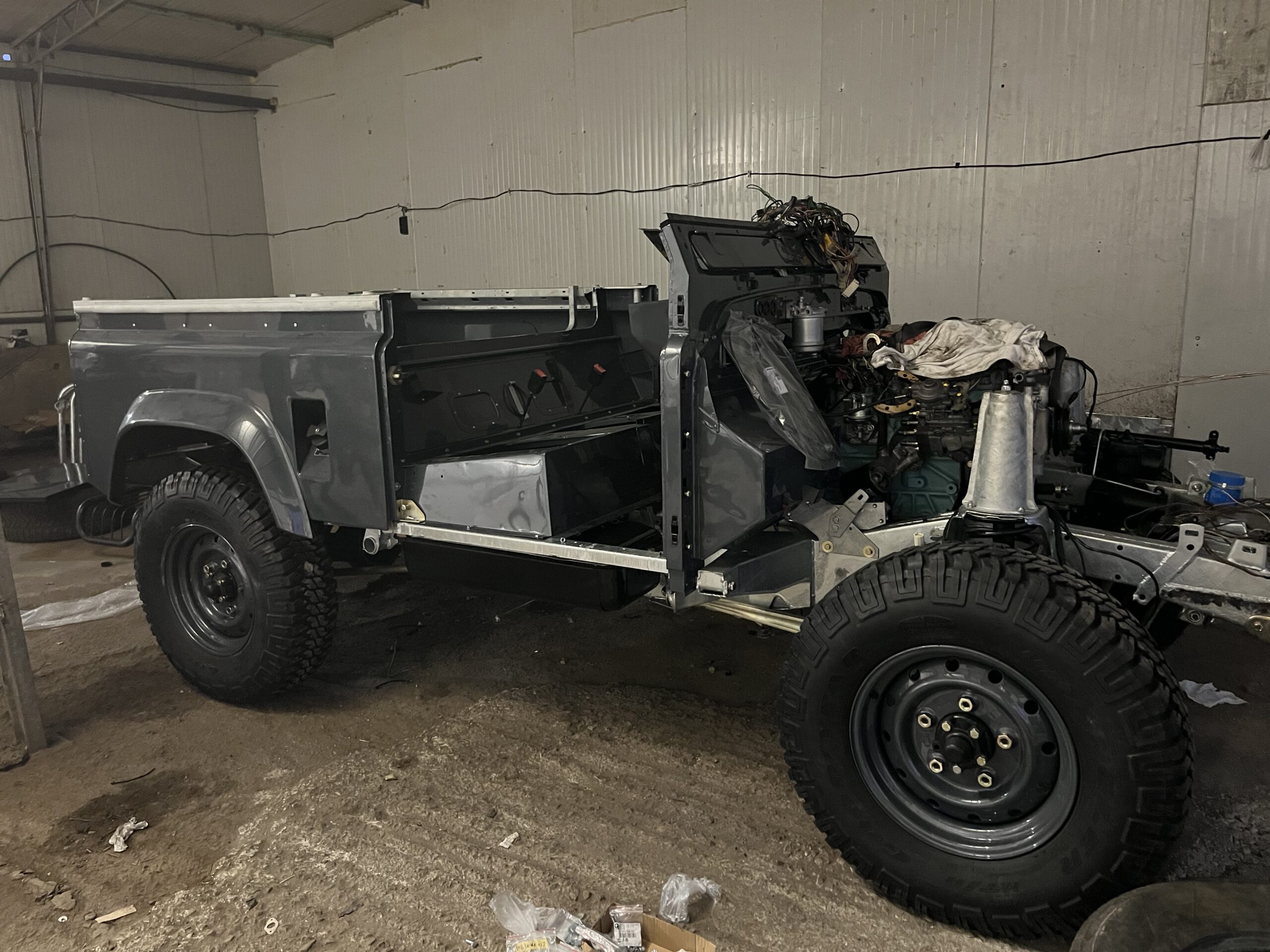
In the back, the teak deck is taking shape in the best tradition of yacht building: each board bonded to an aluminium tray with Sika marine adhesive, the seams caulked just as they would be on a boat deck.
Then the roof, or rather the lack of one. Heavy-duty galvanized roll hoops go on first. They’re stronger than standard hood sticks, and they add real protection to an open truck. Over them goes a soft top spec’d in chocolate Thermoblock, an insulated fabric that keeps the cabin warmer on cool mornings and quieter at speed than ordinary canvas, without losing any of a canvas top’s charm. With the top up, it’s snug, held down with stainless sailboat rope cleats. With the top down, it’s the reason you want the Ninety.
To be continued
The last bolts go in over the coming months, and we’ll finish this story in spring with the final assembly, the finished photos and a walk-around video. Until then, the Ninety is available to reserve. See the Ninety’s spec sheet →